A Guide to Moroccan Cuisine and Dining Traditions
An introduction to Moroccan spices, tagines, couscous, bread, salads, sweets, tea and the social traditions surrounding meals.
Orchid Island
Editorial team
1 min read
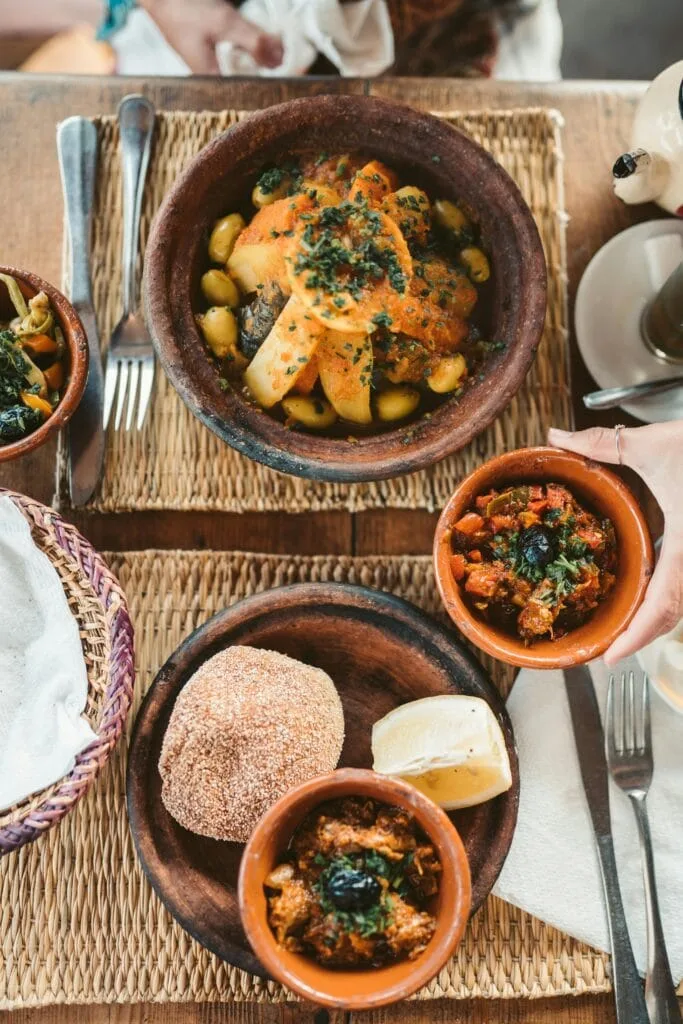
Moroccan cuisine reflects Amazigh, Arab, Andalusian, African, Mediterranean and regional traditions. Recipes vary by city, season and household, so no single menu represents the entire country.
Spices and Seasoning
Cumin, ginger, paprika, cinnamon, saffron and pepper appear in different combinations. Ras el hanout is a spice blend whose composition varies by maker.
Spices support the main ingredients rather than simply adding heat.
Tagine
A tagine is both a cooking vessel and a family of slow-cooked dishes. Versions may use lamb, beef, chicken, fish or vegetables with preserved lemon, olives, fruit, herbs or spices.
The dish changes substantially between regions and cooks.
Couscous
Couscous is traditionally prepared for shared meals, often on Friday. Steamed semolina is served with vegetables, broth and meat or other regional additions.
Bread and Salads
Bread accompanies many meals and is often used to share food from a communal dish. Cooked and fresh salads can include tomato, pepper, aubergine, carrot, herbs and preserved ingredients.
Street Food
Markets and small restaurants offer grilled meats, soups, breads, sandwiches and seasonal specialties. Choose busy, clean vendors and consider food handling and allergies.
Sweets and Tea
Almond pastries, honey, sesame and orange-flower water are common in sweets. Mint tea is associated with hospitality and social conversation, although preparation and sweetness vary.
Dining Respectfully
Follow the host’s lead at a shared meal, wash hands and ask about dietary ingredients where necessary. During Ramadan, meal schedules and public dining patterns change.
Food and Place
Restaurants, home cooking, markets and culinary workshops offer different ways to learn. Respect recipes and knowledge as living practices rather than decorative experiences.
For visitors choosing a Marrakech home, access to markets and neighborhood food culture can be an important part of daily life. Contact Orchid Island to explore residential areas across the city.