Morocco's Strategic Investment Opportunities in 2026
Explore the reforms, capital flows, infrastructure, property, tax framework, and institutional investment shaping opportunities in Morocco in 2026.
Orchid Island
Editorial team
6 min read
Morocco's investment landscape changed substantially between 2023 and 2026. Reform, foreign direct investment, and major infrastructure projects strengthened the country's position as a regional hub for long-term capital.
Its location between Europe, Africa, the Middle East, and Atlantic trade routes attracts investors seeking growth, institutional stability, and diversification. Casablanca is central to that development and continues to reinforce its role as a financial center for Africa.
Sovereign wealth funds, multilateral institutions, and private-equity firms are now committing capital to real estate, manufacturing, renewable energy, logistics, tourism, and infrastructure. This article examines the factors behind that interest and the principal opportunities and safeguards investors should consider in 2026.
1. The New Investment Charter
Morocco launched a major investment reform in 2023. The program targets 550 billion MAD in private investment and the creation of 500,000 jobs by 2026.
The Mohammed VI Investment Fund is designed to attract private capital into infrastructure, tourism and hospitality, healthcare, manufacturing, energy, small and medium-sized businesses, and broader industrial ecosystems.
Together, the charter and fund seek to improve long-term visibility, strengthen investor confidence, and reduce execution risk for major projects. Further information is available from Morocco's national portal.
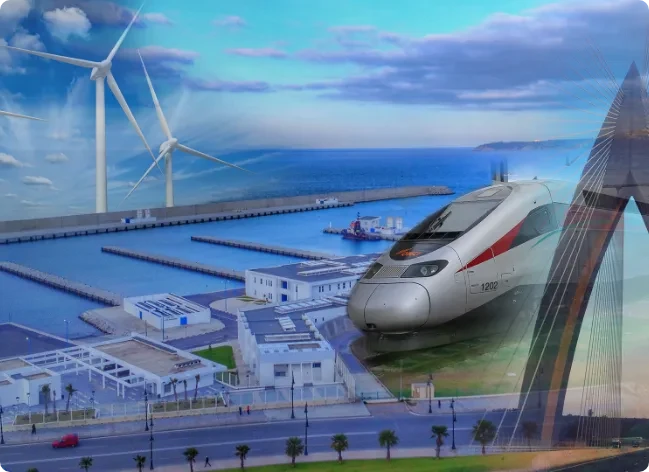
The United Arab Emirates has also emerged as a leading source of foreign investment in Morocco, as covered by Atalayar.
2. A broader base of foreign direct investment
In 2024, the United Arab Emirates became Morocco's leading foreign investor for the first time, surpassing France and accounting for about 19% of total inflows.
Other important sources of capital include Saudi Arabia, Qatar, pan-African platforms such as Africa50, and sovereign and private investors from the United States and Europe. Global private-equity firms are expanding their presence across North Africa as well.
Capital is therefore less concentrated among Morocco's traditional partners. Real estate, infrastructure, renewable energy, tourism, export industries, manufacturing, and digital transformation are all receiving international investment.
3. Why property and infrastructure attract capital
More than 90% of foreign investment in 2024 was allocated to real estate and manufacturing or infrastructure, according to the figures presented in the source analysis. Morocco's long-term urban, industrial, and tourism plans help explain that concentration.
Residential, hospitality, and mixed-use property
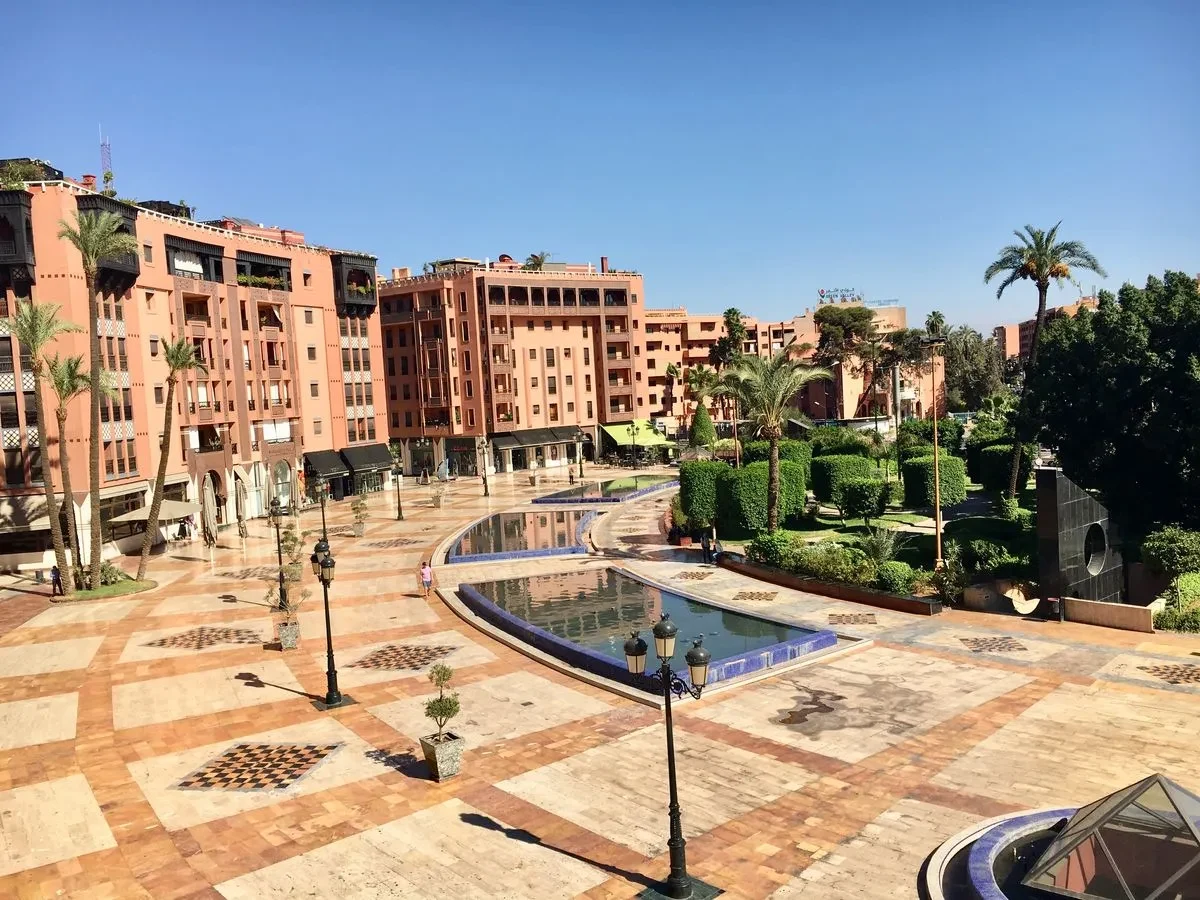
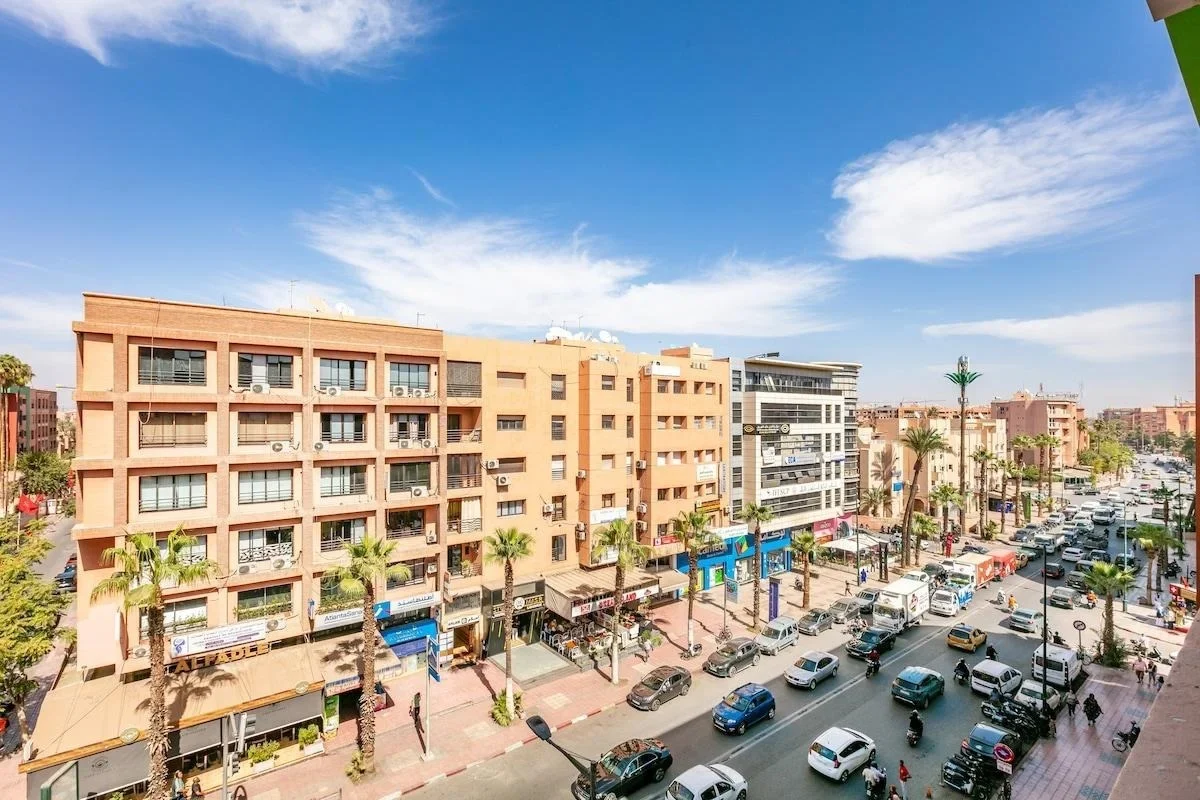
International buyers view Morocco as a comparatively stable growth market. Demand is supported by luxury tourism, expanding urban areas in Marrakech, Casablanca, and Tangier, better transport links, and the arrival of international hospitality brands.
Investors are particularly active in high-end homes, hotels, resorts, and mixed-use developments. Property opportunities can be explored through Orchid Island.
Infrastructure as an economic platform
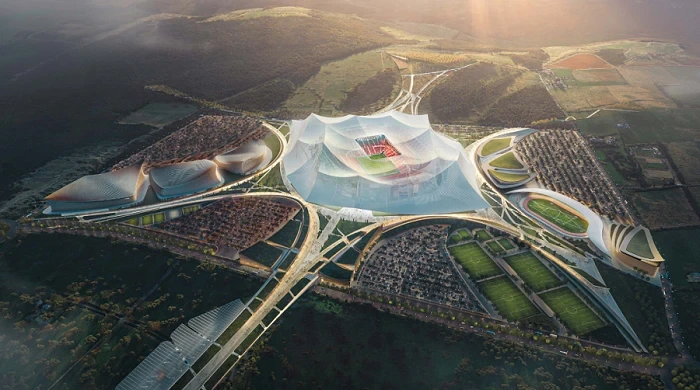
Morocco is among Africa's leaders in high-speed rail, ports, airport modernization, logistics corridors, desalination, and renewable-energy capacity.
Projects planned around 2026 and in preparation for the 2030 FIFA World Cup include rail extensions, expansion of the Casablanca and Marrakech airports, new public-transport systems, major roads, and integrated logistics platforms.
These investments increase connectivity and can support land, tourism, industrial, and residential demand. The African Development Bank's Morocco portal provides further institutional context.
4. Institutions shaping the investment landscape
Sovereign wealth funds
Abu Dhabi's TAQA has a substantial role in national energy supply. Mubadala, ADQ, and ADIA are involved in technology, real estate, and infrastructure.
Qatari Diar is developing large luxury-property projects, while Saudi Arabia's Public Investment Fund invests in renewable energy, tourism, and mining.
Pan-African platforms
Africa50 is an $8 billion infrastructure investment platform headquartered in Casablanca. It focuses on high-impact development across the continent.
The Africa Finance Corporation also supports infrastructure, energy, and economic development in African markets.
International financial institutions
The European Investment Bank has committed more than €10 billion in Morocco for infrastructure and sustainable development. The International Finance Corporation has invested more than $3.5 billion in private-sector growth, industry, and employment.
The African Development Bank describes Morocco as a leading regional partner. The United States International Development Finance Corporation has also committed up to $3 billion to private investment and strategic projects.
Private equity
Mediterrania Capital Partners, Amethis, and Actis are among the private-equity investors active in Morocco. These firms bring long-term capital, governance standards, and operating expertise that can reduce perceived market risk.
5. Legal safeguards for international capital
Convertibility
Qualifying international investors can transfer rental income, dividends, interest, sale proceeds, and invested capital abroad under Morocco's foreign-exchange framework.
This mobility is a significant advantage, but it depends on using the proper channels and maintaining the required evidence from the beginning of the investment.
Repatriation
Once regulatory and tax requirements have been met, funds can generally be repatriated in EUR, USD, GBP, or other permitted currencies. Moroccan banks can process the transfer after the relevant obligations are settled.
Conditions for protection
Investment funds should enter Morocco in foreign currency through official banking channels. Investors should open a convertible-dirham account where required and declare operations to the Office des Changes.
Failure to follow the required process can restrict or stagger capital repatriation, potentially for up to four years in some circumstances. Legal and banking advice should therefore be obtained before funds are transferred.
6. Tax considerations
Investors should review Morocco's official tax information and obtain advice for their own structure.
Standard rates presented for international investors
The source analysis describes real estate capital gains tax at 20% of profit, subject to a minimum of 3% of the sale price. It presents dividend tax at 12.5%, expected to decrease to 10% from 2027, and rental income tax at about 20%.
Rates, bases, exemptions, and effective dates can change. They should be confirmed before a transaction rather than treated as a universal forecast.
Double-taxation treaties
Morocco has agreements with France, the United States, the United Arab Emirates, and numerous European, African, and Asian jurisdictions. Depending on the treaty and a valid tax-residency certificate, some rates may fall to 5% or 10%.
Tax clearance
Before transferring sale proceeds abroad, an investor may need a tax-clearance certificate, known as a quittus fiscal. In a property sale, the notary generally coordinates this process.
7. Casablanca Finance City
Casablanca Finance City is one of Africa's established financial hubs. CFC status gives qualifying companies a framework designed for regional headquarters and cross-border operations.
The source analysis highlights 0% withholding tax on dividends for non-residents until 2025, reduced corporate rates, simplified foreign-exchange procedures, and flexible capital-mobility rules. Current eligibility and rates must be verified because the cited period has ended.
The platform hosts multinational companies, investment funds, and pan-African operators. More details are available from Casablanca Finance City.
8. The 2030 FIFA World Cup
Morocco will co-host the 2030 FIFA World Cup with Spain and Portugal. Preparations are accelerating urban development, transport investment, hotel construction, stadium modernization, and airport upgrades.
The event can increase international visibility, tourism demand, and interest in premium property. Investors should still distinguish confirmed projects from proposals and evaluate assets on long-term fundamentals beyond a single event.
9. Why the 2026 opportunity is distinctive
Morocco combines several structural advantages:
- Sovereign and institutional backing for major projects
- A regulated route for transferring profits and capital abroad
- Strong logistics, energy, port, rail, and transport infrastructure
- Fiscal frameworks such as treaty relief and qualifying CFC benefits
- A strategic position connecting Europe, Africa, the Middle East, and Atlantic routes
- Growth potential supported by comparatively stable institutions
These strengths do not eliminate project, market, currency, regulatory, or execution risk. They do give informed investors a broad base from which to assess opportunities.
10. A strategic perspective for 2026
The momentum created by reform, global capital flows, and projects leading toward 2030 has moved Morocco beyond a purely emerging investment narrative. The country is increasingly treated as an established destination for regional and international capital.
For an investor, the practical question is not simply whether Morocco is attractive. It is which sector, location, structure, and time horizon fit the investor's objectives, and whether the legal, tax, financial, and operational assumptions withstand professional review.
Careful due diligence remains the foundation of any decision. Institutional participation can signal confidence, but it is not a guarantee of returns for an individual project.