Morocco-France Tax Treaty 2026: Guide for Investment and Business
A guide to double taxation, permanent establishments, royalties, financial flows, and dispute resolution between Morocco and France.
Orchid Island
Editorial team
5 min read
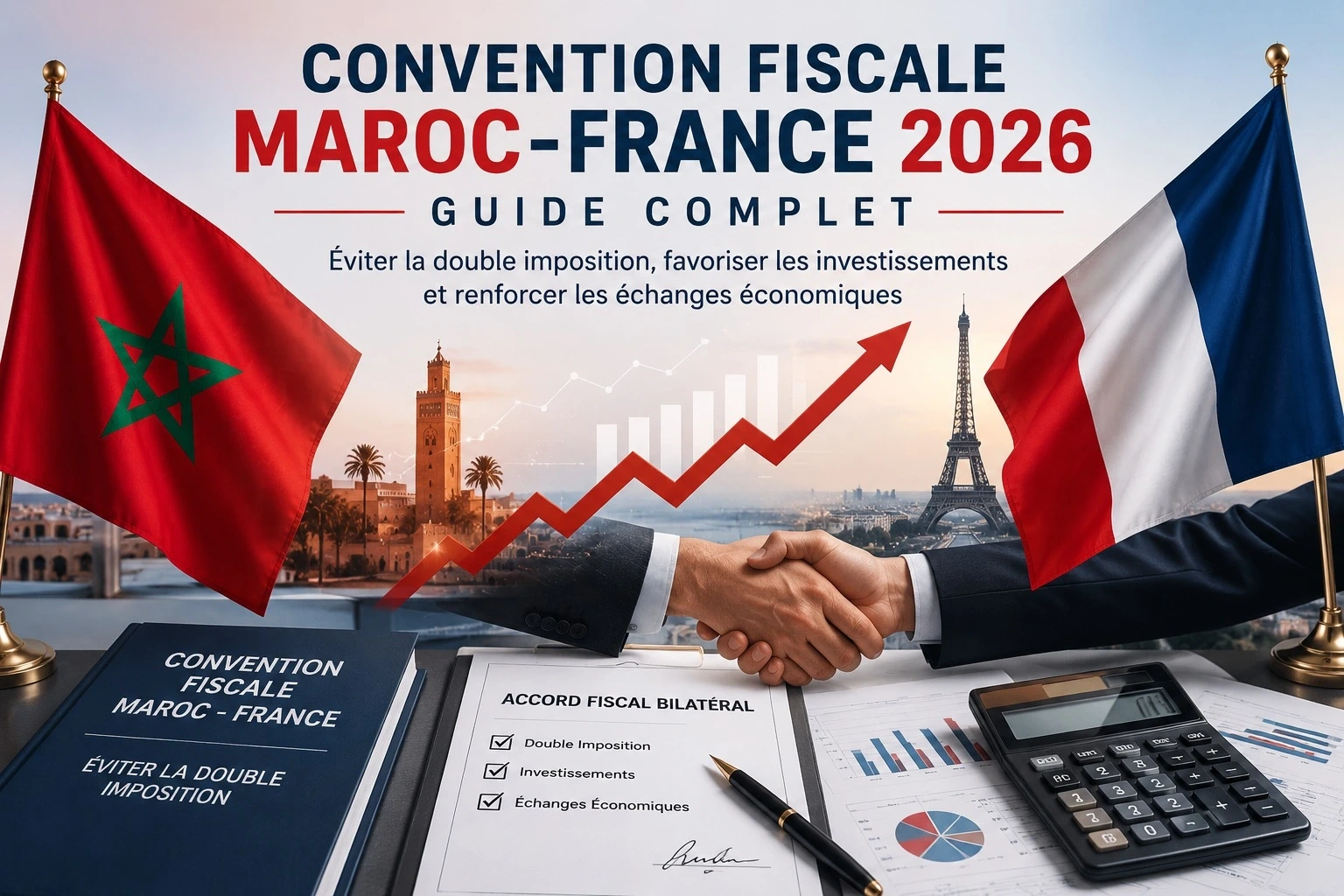
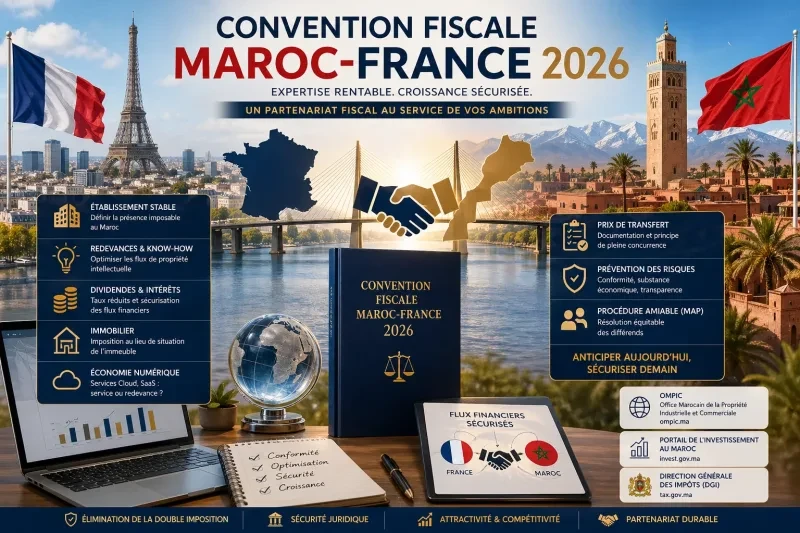
Investment between France and Morocco covers technology, renewable energy, and luxury real estate in Marrakech, among other sectors. In this context, the bilateral tax treaty allocates taxing rights and helps prevent double taxation.
This guide presents the source's interpretation for 2026, including permanent establishments, royalties, financial flows, and digital activity. Tax rules evolve and their application depends on the facts. Every transaction should therefore be checked with a qualified tax adviser and the competent authorities.
1. Origin and development of the treaty
The original text dates from 1970 and has been supplemented by several amendments. The source says interpretive protocols adopted in 2026 changed how tax authorities analyse value creation.
The principal objective remains preventing the same profit from being taxed in Morocco and then France without a mechanism to allocate taxing rights or eliminate double taxation. The treaty therefore identifies which country may tax according to the type of income and activity.
In 2026, the source describes economic substance as a central part of tax reviews. Artificial structures receive more scrutiny, making analysis essential before any investment or restructuring.
2. Permanent establishments
A permanent establishment, or PE, helps determine whether Morocco may tax the profits of a French company.
Physical presence and a fixed place
A fixed place of business through which a company carries on all or part of its activity can constitute a PE. Examples include a place of management, branch, office, or workshop.
The source notes that digital business has made the analysis of what is "fixed" more complex in 2026. A technological or remote presence must therefore be assessed against the applicable text and the activity actually performed.
Construction projects and time threshold
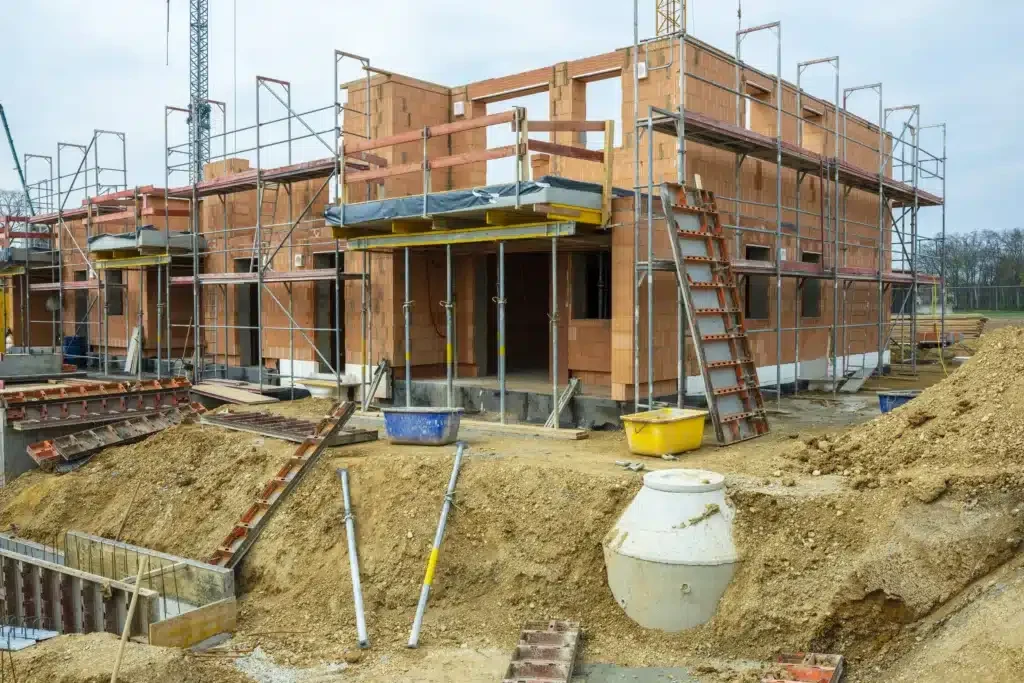
For construction, installation, and property development, the source says a project exceeding a threshold generally set at six months may constitute a PE, referring to OECD standards adapted to the local context.
A long palace renovation or eco-villa construction project could therefore lead to Moroccan taxation. Investors and developers should address the question during planning.
Dependent agents
A French company may be regarded as having a PE in Morocco without its own premises when a person based in Morocco is authorised to conclude contracts on its behalf.
This risk can affect consultants, sales representatives, and business introducers. Contractual authority and the way the relationship operates in practice should be reviewed before activity begins.
3. Royalties, technical assistance, and know-how
Royalties include payments connected with copyright, patents, trademarks, or know-how. Correctly classifying a payment determines its tax treatment.
Technical assistance
The source treats technical assistance as a service. When supplied from France to a Moroccan client without a PE in Morocco, it generally does not incur withholding tax, subject to the contract and facts.
Transfer of know-how
A transfer of know-how is presented as a royalty and may incur withholding tax, often capped at 10% by the treaty according to the source.
The case law mentioned for 2026 defines know-how as the transfer of non-public knowledge necessary to reproduce an industrial or commercial process. Ordinary IT consultancy generally does not constitute such a transfer.
Contracts should describe the service, rights transferred, and responsibilities precisely. For industrial property information, consult the Moroccan Office of Industrial and Commercial Property.
4. Dividends, interest, and financial flows
The treaty may limit withholding tax on dividends paid from Morocco to France. Where the conditions are met, this can facilitate the transfer of profit to a French holding company or its reinvestment.
Caps may also apply to interest, including shareholder loans. The interest rate must reflect normal market conditions and comply with transfer-pricing rules.
5. Property investment in Marrakech
A property investment can produce several flows, including rental income, a capital gain, interest, and management fees. Each must be classified and allocated to the appropriate country under the treaty and domestic law.
The Moroccan investment portal provides an institutional starting point. It does not replace a tax and legal review of the property, ownership structure, and investor's residence.
6. The digital economy, cloud, and SaaS
The growth of Gitex Africa in Marrakech, cloud services, and SaaS products raises a classification question: is a subscription a royalty or payment for a service?
Under the interpretation presented by the source for 2026, the payment is generally treated as a service. An exception may arise when the customer exclusively controls part of the physical infrastructure.
This distinction is important for startups and technology groups operating between France and Morocco. The contract, technical access, and actual control of infrastructure should be documented.
7. Documentation and transfer pricing
Preventing an assessment depends on consistent contracts, economic justification for financial flows, and robust transfer-pricing documentation. The legal structure should match the functions, assets, and risks actually assumed in each country.
Tax authorities are better equipped and expect greater transparency. Documentation prepared before a review is more useful than a justification reconstructed afterwards.
8. Mutual agreement procedure
When the French and Moroccan authorities disagree, the treaty provides a Mutual Agreement Procedure, or MAP. The competent authorities can discuss the case and seek a common solution.
This mechanism aims to prevent double taxation and lasting differences in interpretation. It provides important protection to companies, international groups, and institutional investors involved in cross-border activity.
9. Using anticipation strategically
Careful structuring of royalties, monitoring PE thresholds, and coherent transfer-pricing records improve tax certainty. They also help align a legal structure with its economic purpose.

Morocco attracts French capital through proximity, infrastructure, stability, and growth potential. Marrakech demonstrates this trend in property, technology, and high-value services.
The opportunity requires discipline. Each flow should be classified, every structure supported by economic substance, and material choices documented. Incorporating tax into business strategy replaces a purely defensive response with proactive management of risk and value.
The treaty is therefore more than a mechanism for avoiding double taxation. It is a framework for structuring and protecting exchanges between Morocco and France, to be applied with professional advice tailored to the facts.