Riads in Marrakech: Character, Uses, and Investment
Why Marrakech riads attract buyers, how they can be used, and which title, renovation, access, and operating risks require review.
Orchid Island
Editorial team
2 min read
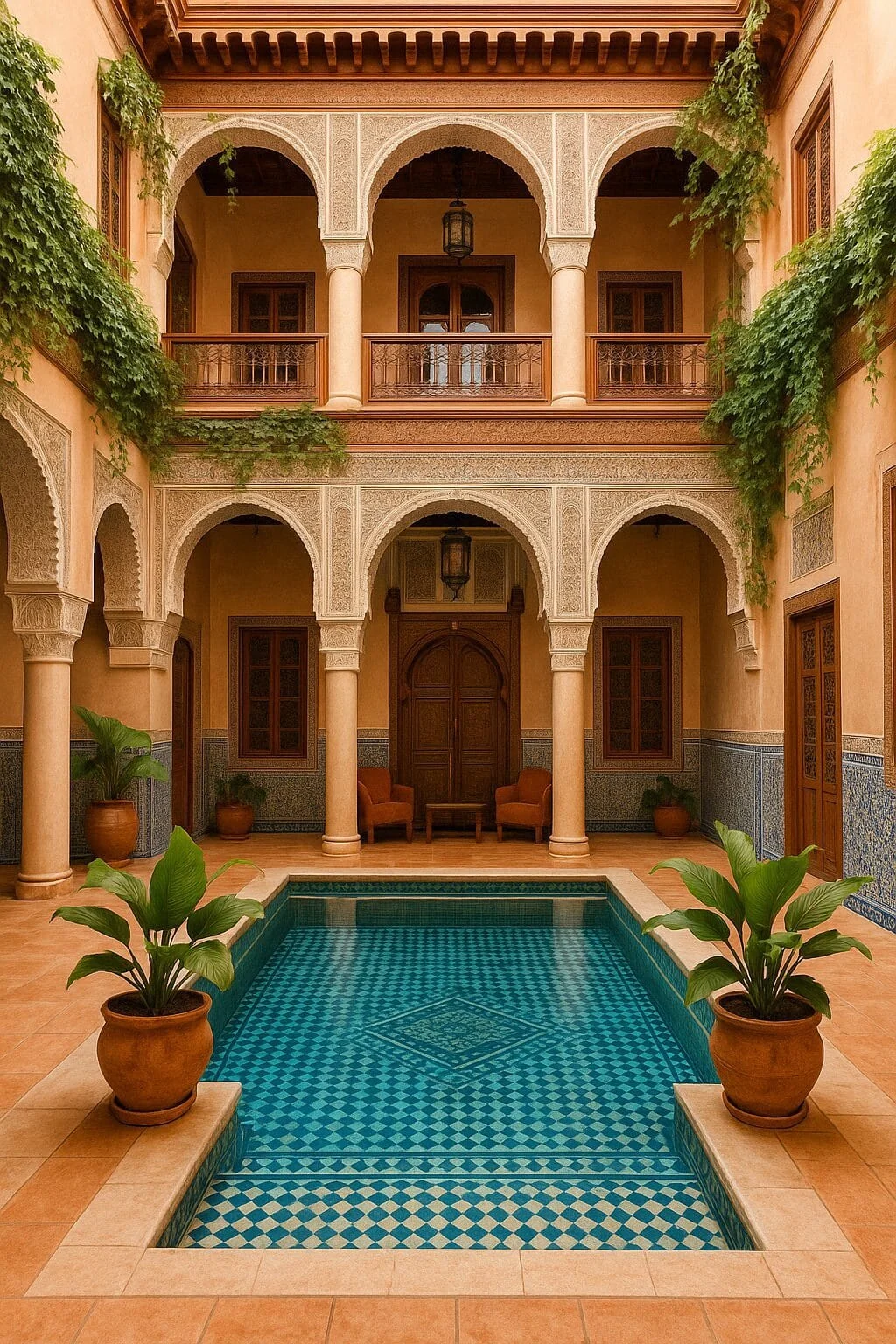
Behind the red walls and busy souks of Marrakech's medina are traditional houses arranged around quiet courtyards. Riads attract residents, cultural travellers, and investors because they combine privacy, craft, central location, and several possible uses.
Their charm does not remove the practical demands of an old building. Title, access, condition, renovation permissions, safety, and management determine whether a riad becomes a successful home or business.
What is a riad?
A riad is an inward-facing Moroccan house built around a central courtyard, often with planting or a fountain. Common features include:
- Intricate zellige.
- Carved timber doors and ceilings.
- Roof terraces with views across the medina.
- Shaded galleries and patios.
This design creates calm and privacy within a dense urban setting. Every building is different, and the quality of its structure and restoration matters as much as its decorative appeal.
Why buyers choose riads
- Cultural character: Traditional proportions, materials, and craft offer a direct connection with Moroccan architecture.
- Location and lifestyle: Many riads are within walking distance of Jemaa el-Fna, the Koutoubia, souks, workshops, restaurants, and cultural sites.
- Personal or commercial projects: A property may become a home, holiday residence, creative retreat, boutique hotel, or guesthouse, subject to permission.
Investment potential
Tourists often seek the experience of staying in a riad, which can support short-term rental demand. Purchase prices may also compare favourably with heritage property in some European or Gulf markets.
Renovation can improve comfort and value when it protects the architecture and solves structural or service problems. Demand for well-restored properties may support resale, but neither rental income nor appreciation is guaranteed.
What makes each riad distinctive?
- A close relationship between history and hospitality.
- Individual handmade details rather than a standard plan.
- Privacy created by inward-facing rooms.
- Potential for adaptive reuse within an existing building.
These qualities also create responsibilities. Traditional materials need specialist care, old roofs and drainage need inspection, and works in the medina can be logistically complex.
Due diligence before buying
Verify the registered or underlying title, seller, boundaries, access rights, charges, planning, taxes, and permitted use. Commission structural, roof, waterproofing, electrical, plumbing, and fire-safety reviews.
If hospitality is planned, confirm licences, room configuration, emergency access, staffing, insurance, tax, and realistic occupancy. Include access for guests, luggage, works, and deliveries in the assessment.
Finding the right riad
Orchid Island Real Estate works with luxury and off-market Moroccan property, including riads in Marrakech. The right choice starts with a clear objective and an honest budget for acquisition, restoration, furnishing, professional advice, and ongoing care.
A carefully selected riad can offer an uncommon combination of architecture, privacy, location, and income potential. Its success depends on verified ownership, sound construction, respectful renovation, lawful use, and capable management.