Why Are House Prices in Marrakech Reaching New Heights?
How tourism, foreign investment, limited central land, construction costs, luxury demand, and urbanisation influence Marrakech prices.
Orchid Island
Editorial team
2 min read
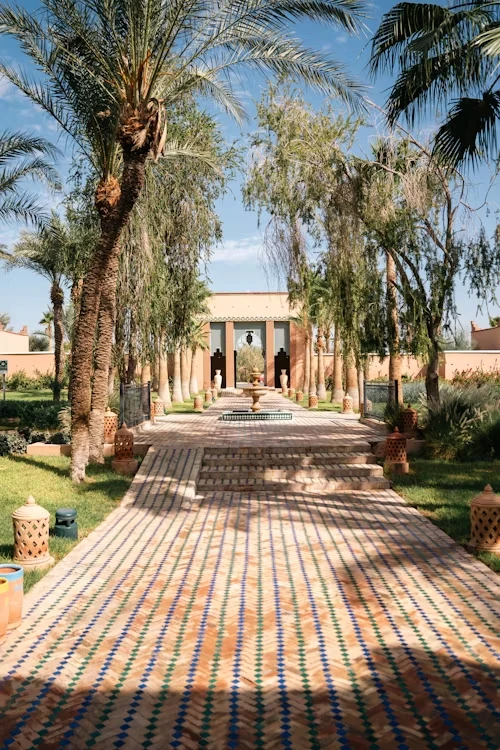
Marrakech combines historic architecture, dramatic landscapes, and a modern tourism economy. Over the past decade, growing demand has moved parts of the city from relatively affordable housing towards a luxury property market.
Several forces contribute to that change. Their impact differs by neighbourhood and property type, but together they help explain why buyers face higher prices.
Tourism and short-term rental demand
Millions of visitors come to Marrakech each year for its souks, gardens, and landmarks such as Jemaa el-Fnaa. This demand supports short-term rentals in the Medina, Guéliz, and the Palmeraie.
When owners convert homes to holiday accommodation, the supply available for long-term residents can fall. International buyers seeking rental income add further competition, making some districts less affordable for local households.
Foreign investment
Buyers from Europe, North America, and the Middle East are attracted by several features:
- Luxury that can remain affordable relative to major world cities.
- A favourable climate and rich cultural heritage.
- Tax incentives and ownership rules available to non-residents.
The source says the government has made foreign purchases easier. Premium developments, including Palmeraie villas, are designed for affluent demand. As more buyers compete for a limited selection, prices can rise.
Limited central land and outward expansion
Marrakech is bounded by the Atlas Mountains and desert landscapes. Scarce land in established central neighbourhoods places upward pressure on prices.
Development has moved towards suburban areas, where new homes require roads, utilities, and services. Investment in those amenities can in turn increase surrounding land values, while the best central sites remain expensive.
Higher construction costs
Cement, steel, and labour cost more than they did a decade ago. Developers pass part of that increase to buyers.
Demand for sustainable materials and smart-home systems can add value and improve performance, but these specifications also raise the initial construction budget.
Luxury development and the riad revival
Traditional riads are prized for their courtyards, architecture, and authenticity. Careful restoration is costly and time-consuming, which contributes to the price of a completed property.
Gated communities and golf resorts also serve buyers who prioritise comfort, security, and amenities. Their prices establish new reference points that can influence the wider market.
Economic growth and urbanisation
People moving from rural areas to Marrakech for employment and improved living standards add to housing demand. Economic growth has also enabled more middle-income households to enter the market.
This is a positive sign of opportunity, but it increases competition for affordable homes when supply does not keep pace.
What the price drivers mean for buyers
Tourism, international capital, scarce land, construction costs, luxury development, and urbanisation interact rather than operate alone. Buyers should therefore compare like-for-like properties by exact district, legal status, condition, plot, and amenities.
One example cited by the source is a luxury villa marketed at 16,000,000 MAD on a 5,000 m² plot with 732 m² of living space. Its private pool, smart-home technology, and Atlas Mountain views illustrate how land, specification, and location contribute to a premium price.
Understanding these drivers helps buyers, sellers, and investors navigate the market with more realistic expectations. Explore properties in Marrakech.