How GITEX Africa Can Advance Real Estate Innovation at Orchid Island
Explore how smart homes, immersive tours, blockchain, analytics, and green technology presented at GITEX Africa can improve real estate.
Orchid Island
Editorial team
3 min read

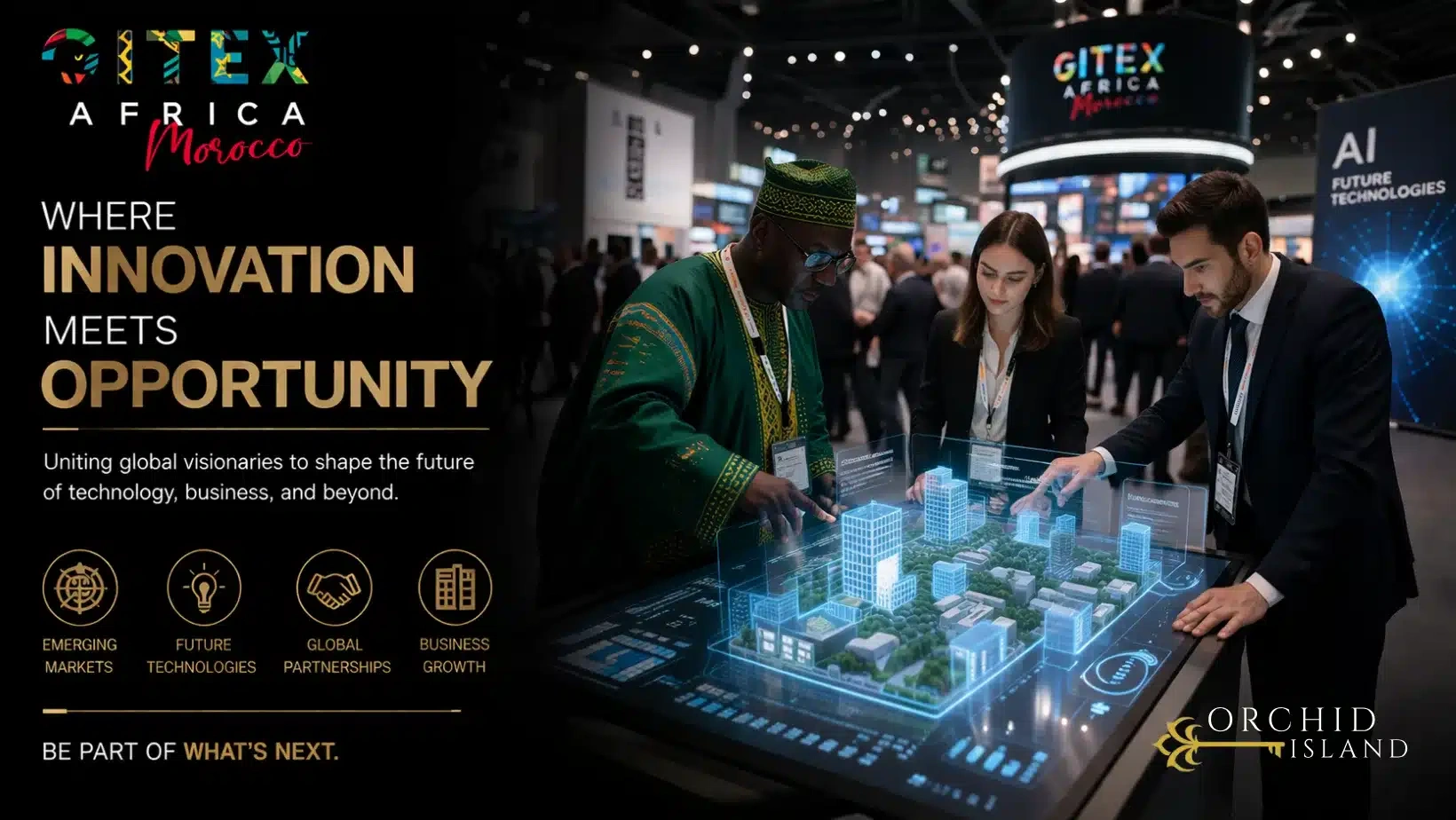
GITEX Africa brings technology companies, founders, investors, and established businesses together around Africa's digital development. Artificial intelligence, blockchain, smart cities, and the Internet of Things are among the technologies with direct applications in property development, management, and sales.
For Orchid Island, the event provides a way to assess tools that can improve the buyer experience, operating efficiency, sustainability, and trust. Technology is valuable when it solves a clear problem and is introduced with suitable security, governance, and support.
What is GITEX Africa?
GITEX Africa is modeled on the established GITEX event in Dubai and showcases Africa's technology ecosystem. In addition to product demonstrations, it supports professional networking, knowledge exchange, investment, and partnerships.
Property companies can meet technology providers and examine how new systems work in practice. That connection is especially relevant in luxury real estate, where buyers expect convenience, clear information, and high service standards.
Why innovation matters to Orchid Island
Orchid Island focuses on premium property and communities shaped by privacy, landscape, comfort, and service. Those qualities remain central, but buyer expectations and operating requirements continue to change.
Carefully selected technology can improve efficiency and the client experience without replacing professional judgment or personal service.
Five areas of real estate innovation
1. Smart-home systems
Connected devices allow residents to manage lighting, climate, security, and appliances through mobile applications or voice controls. In a luxury home, a reliable system can improve convenience and strengthen the property's appeal.
Artificial-intelligence tools can also optimize energy consumption, reduce utility costs, and support environmental objectives. Cybersecurity, privacy, compatibility, and long-term maintenance should be evaluated before installation.
2. Virtual and augmented reality
Virtual reality and augmented reality can make property marketing more useful for remote buyers. Immersive 3D tours allow clients to explore a home before traveling and can show alternative interiors or landscaping concepts.
These tools can shorten the early stages of a search, but they should accurately represent dimensions, finishes, views, and the condition of the property.
3. Blockchain and transaction records
Blockchain systems can create tamper-evident records and support transparent workflows for contracts or property information. In a high-value transaction, better records may reduce some forms of fraud and dispute.
Tokenization can also enable fractional economic interests in property. Any such structure requires careful legal, regulatory, tax, custody, and investor-protection analysis before it is offered.
4. Data analysis
Data tools can help developers examine demographics, buyer preferences, economic conditions, and demand by property type. This evidence can inform design, pricing, and marketing decisions.
Predictive models may identify emerging opportunities, but their output depends on the quality and relevance of the underlying data. They should support, not replace, local market expertise.
5. Green technology
Solar generation, water recycling, and connected irrigation can reduce resource use and operating costs. IoT sensors can make landscape watering more precise, while renewable energy can reduce reliance on conventional power.
These systems support sustainable development and can appeal to environmentally conscious buyers. Their design should reflect the site, building, local climate, maintenance skills, and realistic payback period.
Building a practical innovation strategy
Useful adoption begins with a defined need. Property companies should test products, select credible partners, train staff, and plan for integration, support, data protection, and replacement costs.
Engagement with GITEX Africa and its startup ecosystem can help Orchid Island monitor emerging tools and form partnerships. A culture of learning makes it easier to adopt technology when the business case is clear.
A roadmap rather than a showcase
GITEX Africa demonstrates how quickly technology and real estate are converging. Smart homes, immersive marketing, secure records, analytical tools, and sustainable systems can all improve luxury property when they are implemented responsibly.
For Orchid Island, the event is most valuable as a roadmap for practical progress. Innovation should deepen trust, service, and environmental performance while preserving the human expertise at the center of a property decision.