Marrakech Real Estate Investment 2026: Trends Shaping Global Capital
An assessment of the tourism, infrastructure, luxury, and sustainability trends influencing Marrakech real estate investment in 2026.
Orchid Island
Editorial team
8 min read
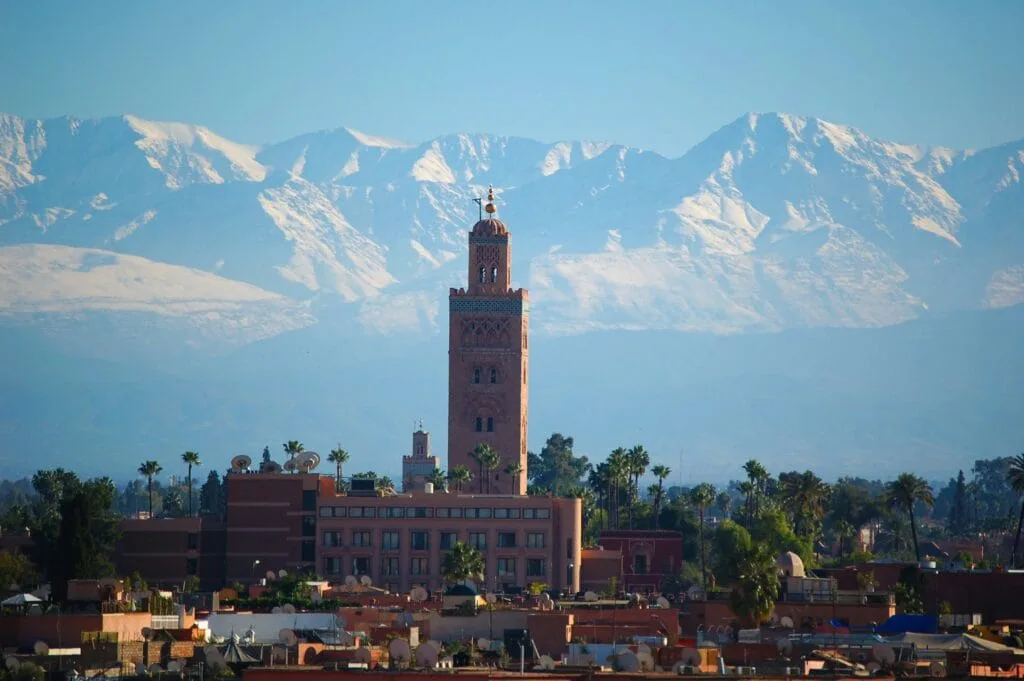
Economic volatility and geopolitical change have encouraged many investors to examine emerging markets that may offer both resilience and attractive income potential. Within that search, Marrakech real estate presents a distinctive combination of cultural appeal, tourism demand, and improving infrastructure.
Well-located segments are projected to record price growth of 2% to 5% over the next 12 months. Tourism expansion and infrastructure work ahead of the 2030 FIFA World Cup are important parts of that outlook. Together, these forces are influencing how international investors assess the city within broader capital-allocation and diversification strategies.
Orchid Island Real Estate works across Marrakech's luxury market, from villas in the Palmeraie to restored riads in the Medina. These assets appeal to buyers seeking capital appreciation, short-term rental income, or a long-term personal holding. This article examines the principal trends shaping the market in 2026 and the considerations behind them.
Marrakech in 2026: Market Context and Opportunity
Marrakech's property market continues to benefit from tourism growth and generally favorable economic conditions. Luxury homes attract both Moroccan and international buyers, while Guéliz, Hivernage, and the Medina remain among the districts receiving the strongest investor interest.
Morocco welcomed nearly 20 million visitors in 2025 and expects 26 million by 2030. The country's Light in Action tourism roadmap includes MAD 6.1 billion for infrastructure and tourism development, indicating that this momentum is intended to be sustained rather than temporary.
Property values have also risen in recent years. Some emerging neighborhoods recorded growth of 15% to 25% over the past three years. Forecasts for 2026 remain positive despite global uncertainty, with luxury apartments expected to outperform villas in several districts and residential values projected to rise by up to 16% in selected premium areas.
The Palmeraie continues to draw investors because of its restricted supply, exclusive residences, and access to high-quality amenities.
Price Benchmarks Across the City
Visitors can explore the destination through Visit Marrakech, while investors should assess individual neighborhoods and properties through current comparable evidence.
Recent market analyses place the citywide average near 9,600 MAD per square meter. Luxury properties in Hivernage can exceed 25,000 MAD per square meter, while high-end villas in the Palmeraie average approximately 12,700 MAD per square meter. The latter reflects the district's exclusivity and proximity to golf courses and luxury resorts.
Renovated riads in the Medina remain a strong investment category. Properties with clear legal titles are expected to appreciate by 5% to 9% annually, supported by demand from luxury travelers, short-term rental operators, and international buyers seeking authentic Moroccan architecture.
Restricted availability in the most desirable districts helps sustain competition for premium assets. This supply-and-demand balance is one reason Marrakech has remained resilient amid wider economic uncertainty.
Examples From the Luxury Segment
Orchid Island's portfolio reflects the breadth of the market. One Palmeraie mansion occupies 31,000 m², includes 23 bedrooms and 32 bathrooms, and is priced at $23,000,000. At another scale, divisible land approved for villa development starts at $75 per m². These assets address different strategies, from private ultra-luxury ownership to phased development.
Luxury short-term rentals are reported to generate average annual yields of 5.5% to 7%, exceeding returns in several European comparison markets.
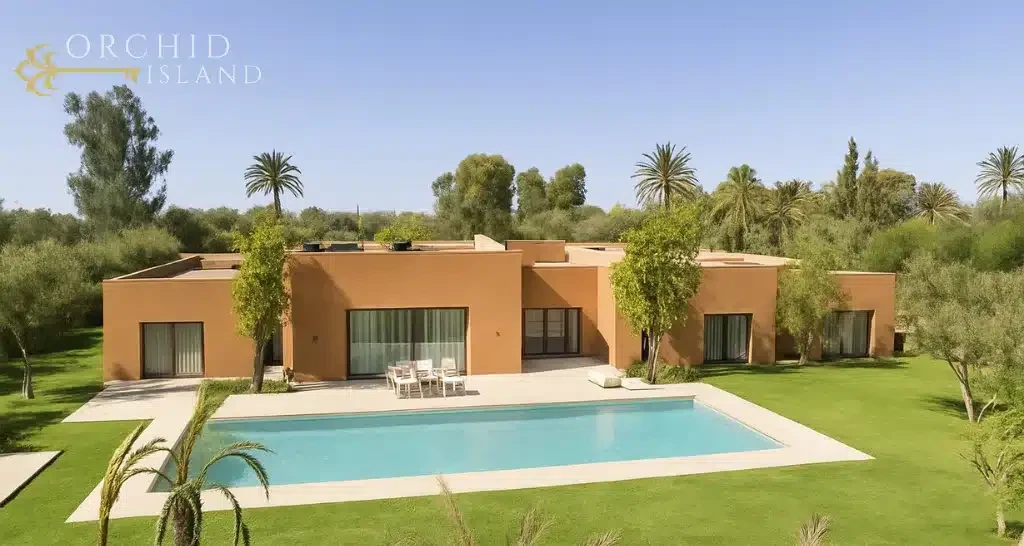
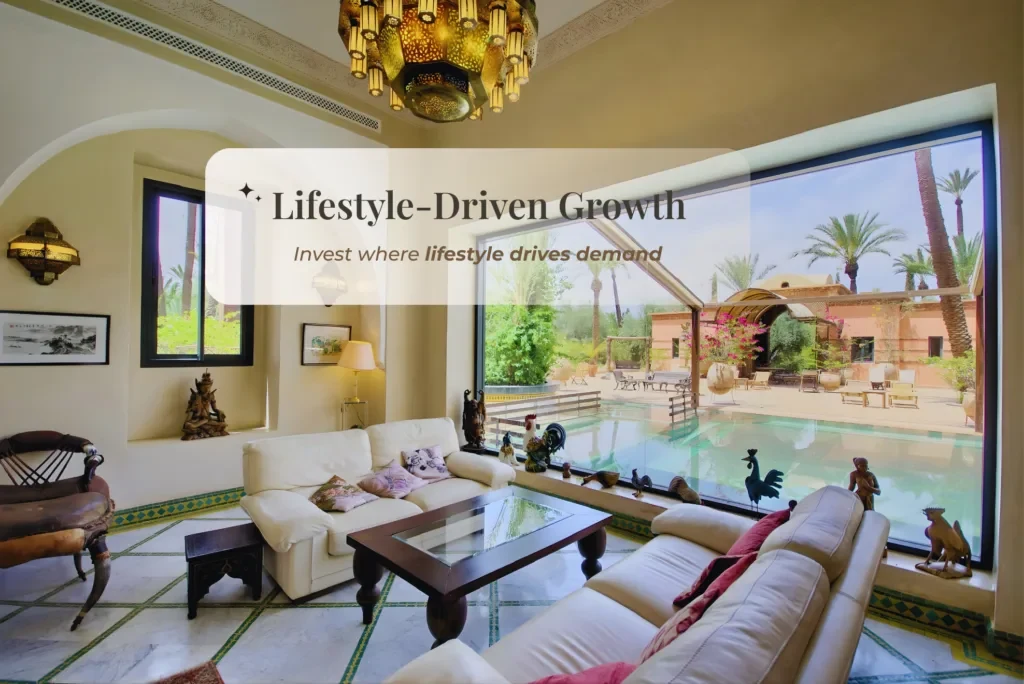
The appeal of Palmeraie estates extends beyond scale and privacy. Many combine interior refinement with outdoor living through floor-to-ceiling glass doors that connect expansive rooms to private infinity pools, gardens, palm groves, and views toward the Atlas Mountains.
Handcrafted tadelakt walls, turquoise and gold zellige, carved cedar ceilings, brass lanterns, and artisanal furniture give these homes a distinctly Moroccan identity. This combination of architecture, natural light, and direct pool views also strengthens their rental appeal. High-end travelers and seasonal residents may pay a premium for immersive, photogenic settings of this kind.
Orchid Island has observed that properties with these signature features can achieve occupancy and yield multiples 20% to 30% above comparable assets that lack the same architectural drama or direct pool outlook.
Ownership Costs and Access for International Buyers
The market attracts Europeans, members of the Moroccan diaspora, and North Americans seeking geographic diversification. Foreign buyers can acquire property with relative ease, subject to appropriate legal review.
Typical acquisition costs include notary fees of around 6% to 7% and agency commissions of approximately 3%, bringing total transaction costs to about 10%. Mortgage financing may be available with down payments of 20% to 30%, depending on the borrower, lender, and property.
ValuStrat forecasts cited in the market outlook indicate that residential capital growth could reach up to 16% in 2026, particularly in luxury segments where apartments may outperform villas. Any projection should nevertheless be tested against current data and property-specific due diligence.
Key Trends Driving the Market
Several connected trends are shaping Marrakech real estate in 2026. Each has implications for private, high-net-worth, and institutional investors.
1. Tourism Demand and the World Cup Catalyst
Morocco's role as a co-host of the 2030 FIFA World Cup is accelerating investment in transport and visitor infrastructure. Projects include the planned high-speed rail extension from Kenitra to Marrakech and upgrades to airports, with aggregate investment measured in the billions.
This infrastructure cycle is expected to support cumulative price growth of 15% to 25% over the next three to five years in prime segments. As one of Morocco's leading cultural destinations, Marrakech is positioned to benefit directly.
Airbnb data identifies Marrakech as the country's leading short-term rental market, with average monthly revenue of $1,407 and occupancy near 41.5%. This performance has encouraged the conversion of riads and villas into boutique accommodation.
One example in Orchid Island's market is a 250 m² luxury villa offered at $1,620 per night in an area such as Tassoultante or Mechouar Kasbah. On the assumptions cited in this outlook, record tourism and World Cup-related infrastructure could support cumulative appreciation of 25% to 35% over the next five years in prime locations.
2. Luxury Demand and Sustainability
Demand for high-end homes continues to rise. Sales above $1 million increased by 12% year over year in early 2025. Renovated Medina riads and modern villas around Gueliz are among the categories attracting attention, while Hivernage prices range from €3,000 to €5,000 per m².
Environmental performance is also becoming more important as investors incorporate sustainability and ESG criteria into their decisions. Solar-powered homes form part of that trend. Orchid Island's 4-hectare luxury estate with divisible plots, for example, can support a lower-impact development strategy if planning, infrastructure, and design are handled appropriately.
3. Urbanization and Infrastructure Upgrades
Residential appreciation in major urban markets has reached 3% to 7% annually. Transport projects, port expansions, and renewable-energy initiatives are improving connectivity and influencing property values in districts such as Agdal and Sidi Maarouf.
Development land approved for 22 villas illustrates how investors may gain exposure to this urbanization cycle through a planned, scalable project rather than a single completed residence.
4. International Capital Inflows
Morocco's political stability and policies intended to welcome investment continue to attract foreign capital. International real estate franchises such as RE/MAX are expanding as construction activity builds around the 2026 Africa Cup of Nations and the 2030 FIFA World Cup.
European and North American buyers are also entering the market at price points that can appear accessible relative to their home countries. The relevant comparison, however, should include legal status, build quality, location, operating costs, and exit liquidity, not simply the headline acquisition price.
Marrakech as a Diversification Component
For institutional and high-net-worth investors, Marrakech can offer exposure with relatively low correlation to some Western property markets. Its potential for rental income and capital growth, together with Morocco's investment in renewables and infrastructure, also connects the market to wider interest in sustainable finance and private credit.
The growth of blended finance in Africa is relevant to Marrakech's eco-luxury segment. Morocco increasingly serves as a gateway to opportunities on the continent, while yields in selected Marrakech assets may exceed those in more saturated markets.
Orchid Island helps clients evaluate this role through access to public and pre-market opportunities. Examples include a 304 m² villa at RiverPalm priced at $400,000 and a recent Palmeraie estate transaction reported to have generated annual appreciation of 8% to 10%.
Navigating the Opportunity With Professional Support
Orchid Island supports investors across property selection, due diligence, investment analysis, renovation coordination, legal guidance, and financing introductions. This applies to both income-producing short-term rentals and longer-term holdings.
Clear title, realistic operating assumptions, and tourism seasonality require particular attention. The strongest investment decision is based on verified property records and current market evidence rather than a citywide forecast alone.
As Morocco advances preparations for major events, including the 2030 World Cup, Marrakech offers a blend of cultural appeal, improving connectivity, and entry prices that remain competitive with saturated European destinations.
Conclusion
Tourism demand, infrastructure investment, luxury positioning, and greater attention to sustainability define the Marrakech market in 2026. The outlook cited in this article points to cumulative growth of 25% to 35% over five years in prime segments, but actual performance will vary by asset, legal condition, management, and entry price.
For investors building a diversified portfolio or acquiring a personal residence, Marrakech warrants careful consideration. Orchid Island Real Estate can provide a private presentation of relevant opportunities and guide the process from initial selection through completion.
Contact our team to request further information or arrange a private consultation.